What Surviving 2026 Actually Looks Like for Multi-Location Restaurant Operators in Canada
A table of four walks out without flagging anything to the server. No complaint, no request to speak with a manager. They pay the bill, leave a modest tip, and within 48 hours, one of them posts a two-star review that mentions lukewarm food and an indifferent front-of-house team. Your location manager sees it on Friday afternoon. By then, it has been read by 200 people who were searching your brand name. That scenario is not exceptional. For multi-location operators running 10, 20, or 50 covers per shift across several properties, it is Tuesday.
The operating environment heading into 2026 has compressed the margin for that kind of invisible loss. Food cost has stabilized somewhat from its pandemic highs, but labour remains structurally elevated across Ontario and British Columbia, minimum wage increases are already baked into 2025 and 2026 budgets, and consumer discretionary spending is measurably softer. The Bank of Canada’s rate cuts have not yet translated into the dining-out confidence that operators were counting on. Restaurant traffic in Canada declined year-over-year for the third consecutive quarter in early 2025, according to tracking from Restaurants Canada, and there is no credible forecast suggesting a sharp reversal before mid-2026.
In that context, the conversations happening in corporate ops right now are not about growth. They are about protection. How do you hold revenue per guest? How do you keep your regulars coming back when they have real alternatives and real budget pressure? And how do you do that without adding headcount to an already stretched management structure?
The Compounding Risk That Spreadsheets Miss
Multi-location operators understand unit economics. They track average cheque, table turns, labour as a percentage of revenue, food cost per cover. What is harder to quantify, and therefore easier to underinvest in, is the compounding risk of guest churn at the margins. A guest who has a mediocre experience and never returns does not show up as a line item. Neither does the review that quietly suppresses new trial at a location for six months. Neither does the donation request from a local school that got ignored for three weeks and ended up generating a social post about how your brand does not support the community.
These are not dramatic failures. They are the slow bleed that makes a marginal location go from viable to vulnerable over 18 months. In a strong market, operators can absorb that bleed because new guests are walking in the door. In a soft market, retention is the whole game.
Corporate ops teams running multiple locations face a specific version of this problem: they cannot be everywhere. A regional director covering eight locations cannot personally triage every unhappy guest, approve every donation letter, or audit every location’s review response cadence. The question is not whether to have systems — it is whether those systems are doing real work or creating the illusion of process.
The standard playbook has been comment cards (ignored), online feedback forms (completed by guests who were already going to write a review anyway), and manager log notes that live in a binder no one reads. None of those tools intercept a guest at the moment when recovery is still possible, which is the 30 to 60 minutes after they leave your dining room, while they are still deciding whether this experience is worth broadcasting.
Where Revenue Protection Actually Lives
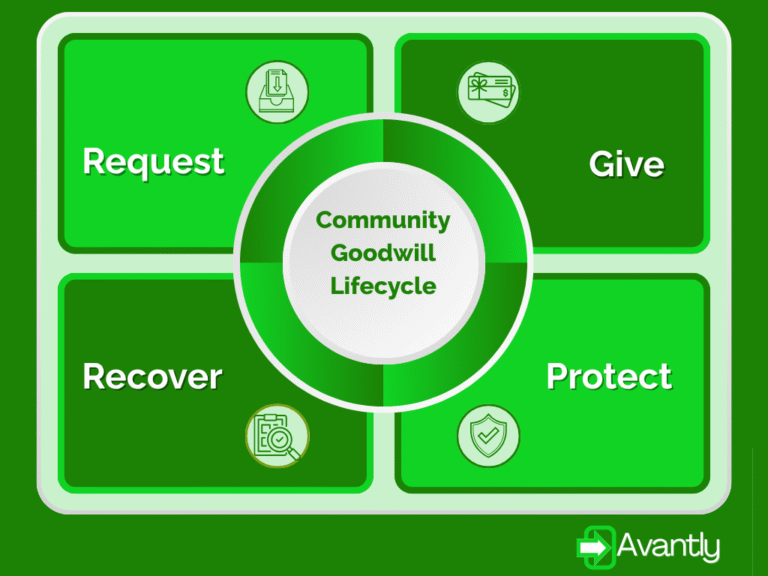
There are three operational areas where the ROI conversation gets very concrete very quickly for multi-location operators in a down market.
The first is guest recovery. The research on service recovery is not new, but it is consistently underweighted in how operators allocate their technology budget. A guest who has a problem acknowledged and resolved is statistically more loyal than a guest who never had a problem at all, often referred to in the hospitality literature as the service recovery paradox. The implication for operations is that the unhappy guest leaving your location right now is not a lost cause. They are an opportunity that has a very short window. SMS-based recovery workflows, the kind that reach guests within minutes of leaving, before they open Google or OpenTable reviews, are closing that window in measurable ways for operators who have deployed them.
The second is donation management. This sound administrative, and most corporate ops teams treat it that way. That is a mistake. Community giving is a legitimate traffic driver, particularly in suburban and mid-market locations where the brand’s relationship with local organizations: hockey associations, school fundraisers, food banks, has direct influence on regular guest behaviour. The problem is that donation requests arrive chaotically, get handled inconsistently across locations, and almost never generate the follow-through that would turn a one-time gift into a relationship. When a request from a local minor hockey association sits unanswered for two weeks, that organization’s families notice. When it is handled promptly and professionally, those same families become regulars. The ROI is real; it just requires a process that scales across locations without burying your managers.
The third is reputation management as an operational discipline rather than a marketing function. Most multi-location operators have assigned review monitoring to their marketing team or a vendor who sends a weekly report. That is not the same as having a system that prevents a three-star review from going up in the first place. The distinction matters enormously when you are in a market where a half-star drop on Google Maps correlates with meaningful reductions in new guest trial.
This is precisely the operational territory that Avantly was built for. The platform connects guest recovery via SMS, donation request tracking, and reputation protection workflows into a single system designed specifically for multi-location operators who need consistency across properties without adding management overhead. It is not a marketing tool. It is an operations tool that protects the revenue you have already earned by getting a guest through the door.
The operators who will be in the strongest position by the end of 2026 are not necessarily the ones who cut the most aggressively or the ones who spent the most on acquisition. They are the ones who quietly closed the gaps where value was leaking, the unhappy guest who left without being heard, the donation letter that went unanswered, the review that posted before anyone knew there was a problem. In a margin-compressed environment, operational discipline around guest retention is not a nice-to-have. It is the highest-ROI line on the balance sheet.
The Bottom Line
Multi-location operators heading into 2026 are navigating a market that punishes passivity. When covers are harder to fill and every regular represents compounding value over months and years, the systems that protect existing guest relationships deserve the same rigour that operators apply to food cost and scheduling. The revenue is already in the room. The question is how much of it walks out the door without ever coming back, and whether your operation has the tools to change that number before it shows up in your quarterly review.