Image

How to track restaurant community donations before they disappear into the Invisible P&L Line™

Ask any multi-location restaurant operator how much they spent on food last quarter and they will usually give you a number within a tight range. Ask what the group gave away in school auctions, youth sports sponsorships, charity gift cards, appeasement vouchers, and one-off community asks, and the answer gets fuzzy fast. That is the problem. Learning how to track restaurant community donations is not about becoming less generous. It is about knowing what generosity is actually costing, where it is going, and whether it is doing any work for the business after it leaves the building.

What are Community donations costing you?

Most operators already run on thin patience and thinner margins. That makes blind spots expensive. Restaurants Canada reported that, as of November 2025, 44% of restaurants were operating at a loss or breaking even, while 60% of operators said profitability was worse or much worse than expected compared with 2024. In the same report, 88% named food costs as a top concern and 89% said the same about labour. When that is the backdrop, an untracked five-figure giveback habit stops being a soft issue and starts being a finance issue. Restaurants Canada

There is pressure on the demand side too. Restaurants Canada’s 2025 Foodservice Facts report found that 75% of Canadians are eating out less often because of the rising cost of living. Per-capita spending at full-service restaurants is still below 2019 levels. In plain English, operators are fighting harder for every visit while trying to protect margins on every plate. That is exactly why unmeasured community giving deserves the same visibility as food, labour, and discounts. Restaurants Canada

The twist is that community giving rarely feels expensive in the moment. One silent auction request here. A $50 card for the local hockey team there. A manager approving a fundraiser basket because the parent asking is standing at the host stand during the lunch rush. None of these decisions look reckless on their own. Across five locations, all year long, they add up.

That hidden accumulation is what Avantly calls the Invisible P&L Line™. It names a line item that exists operationally, but not visibly. The money leaves. The value is real. The tracking often is not.

The Invisible P&L Line™ explained

The Invisible P&L Line™ is not just the face value of the donation. It is the full cost of community generosity when no one can see the pattern. It includes the voucher itself, the staff time spent handling the request, the inconsistency between locations, the lack of expiry control, and the missed chance to connect that act of goodwill to a future visit, guest recovery, or public review. That is why this belongs inside Community Operations, not in a random folder called "miscellaneous". Avantly Avantly features

Here is the directional math that gets operators to sit up straight. A five-location Ontario group does not need to be especially charitable to land in five figures. Approve two community donations per week per location at a face value of $25 to $40 and the annual total lands between roughly $13,000 and $20,800. Round that conservatively and you are in the $12,000 to $20,000 range before you count admin time or the occasional larger sponsorship. That number is usually higher than operators expect.

At the same time, Statistics Canada reported that prices for food purchased from restaurants were up 3.2% year over year in July 2025. So while menu prices are moving up under pressure, every untracked giveaway matters more, not less. The issue is not that community giving is wrong. The issue is that invisible spend is hard to defend, hard to improve, and impossible to learn from. Statistics Canada

5 signs your donation process is broken

  • 1.

    Managers are deciding in the moment

    When a request shows up at a location instead of in a central intake flow, the decision usually lands on whoever is standing there. That creates uneven approval standards across the group. One location says yes to every school raffle. Another says no because the manager had a rough Friday night. Neither decision is being made with visibility.

  • 2.

    Requests arrive through six different channels

    Email, Instagram, walk-ins, voicemail, DMs, handwritten letters. That is not a process. That is a scavenger hunt. Once requests come in through multiple channels, no one can answer basic questions like how many came in this month, which causes got approved, or which locations are being hit hardest during school fundraising season.
  • 3.

    The value leaves the business without a record

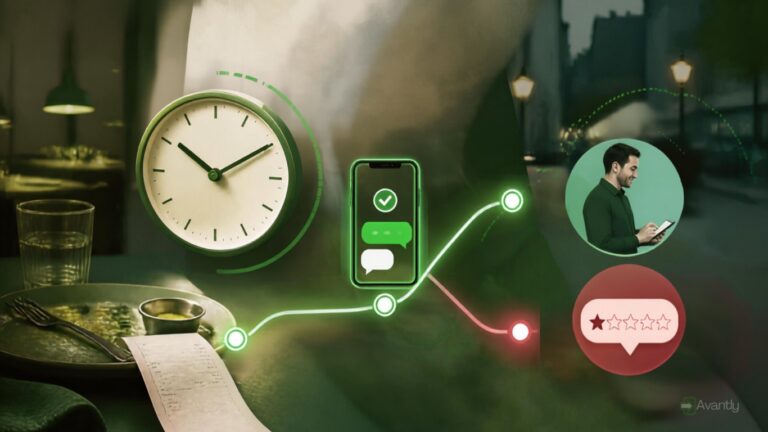
    Gift cards, verbal approvals, handwritten notes, and "just take care of it" instructions all create the same problem. The value is real, but the trail is weak. Avantly’s workflow is built around issuing tracked digital vouchers, setting expiry dates, and following redemption from issue to use. That is the difference between community goodwill you can measure and community goodwill you can only remember vaguely at budget time. Avantly features

  • 4.

    You cannot connect giving to any return

    Not every donation should produce direct sales. That is worth saying plainly. But some should bring in first-time visits, group bookings, or repeat traffic. If you do not know which vouchers were redeemed, which organizations drove visits, or whether the recipients became guests, then community giving ROI for restaurants stays theoretical. You are funding goodwill without learning where it actually compounds.

  • 5.

    Head office finds out too late

    The broken version of this story usually ends in a quarterly review. Someone asks how much the group gave away. Finance pulls partial numbers. Operations fills in the gaps from memory. Location leaders mention a few larger community asks that never made it into a spreadsheet. Everyone agrees the number is probably bigger than it looks. That is the Invisible P&L Line™ in action.

What tracking changes

The first thing tracking changes is not the amount you give. It changes your line of sight. Once requests, approvals, voucher values, expiries, and redemptions live in one place, the conversation gets smarter. You can see which causes align with the brand, which locations are carrying most of the volume, and whether September and November are your real pressure months. You can also stop pretending that "community" is one bucket when the asks actually come from schools, sports, hospitals, neighbourhood events, and guest recovery.

The second thing it changes is consistency. A group-wide policy no longer lives in a manager’s memory or a dusty Google Sheet. It shows up in the workflow itself. What qualifies. Who approves. What value ranges make sense. How quickly requests get answered. Which voucher rules apply. That kind of structure does not make operators less generous. It makes generosity dependable, fair, and easier to defend to finance.

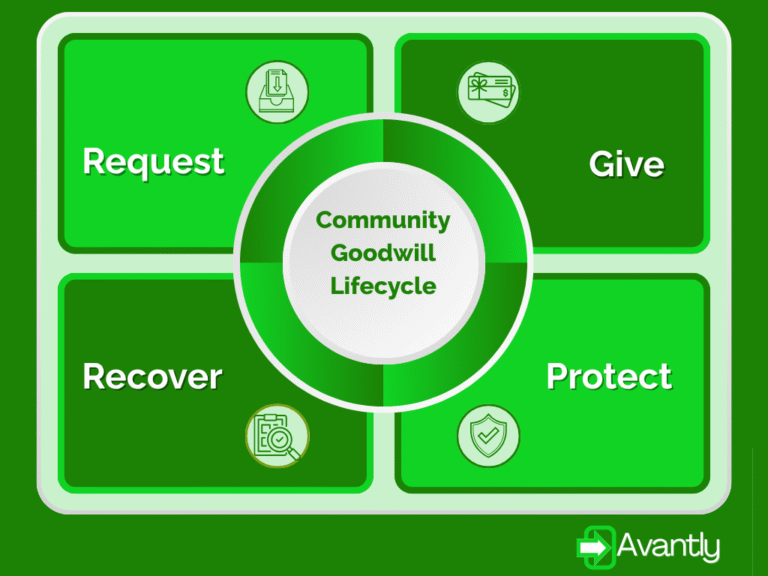
The third thing it changes is what happens after the give. In the Community Goodwill Lifecycle™, the first two stages are Request and Give. Most groups stop there. The stronger model keeps going to Recover and Protect, where guest recovery vouchers and proactive reputation management live in the same operating system. In other words, the same discipline that helps you track a school fundraiser can also help you catch an unhappy guest inside the 10-Minute Window™ and steer the outcome away from a public review. That is not three problems. It is one workflow. Avantly Avantly features

This matters because public reputation and community goodwill are closer than they look. One builds trust before the visit. The other protects it after the visit. When both are untracked, operators are flying on instinct. When both are visible, they can make sharper decisions without losing the human part of hospitality.

How to track restaurant community donations in 30 days

Start simple. The goal for the first month is not perfection. It is visibility.

  • Week 1:

    give every request one front door

    Pick a single intake path for all community requests. That can be a form, an email alias, or a structured request page. The important part is that every location uses the same door. Once requests stop arriving in random places, the counting can begin.

  • Week 2:

    capture the five fields that actually matter

    Track the requesting organization, the location involved, the approved value, the date issued, and the expiry date. Add redemption status if you can. These are the minimum fields that turn a nice gesture into an operating record.

  • Week 3:

    stop issuing untracked value

    Any approved donation should leave a record. A tracked digital voucher is cleaner than a paper gift card because it gives you issue date, value, expiry, and redemption history in one place. Avantly’s donation and recovery workflow is built for exactly that, which is why the reporting side is as important as the issuance side. Avantly features

  • Week 4:

    review the pattern, not just the total

    By day 30, look for where requests cluster, who approves most often, and what values are being issued by location. You may find one neighbourhood school generating strong repeat traffic and another set of requests producing nothing beyond a thank-you email. That is useful. It tells you where to keep giving, where to tighten criteria, and where the process needs work.

The point of the first 30 days is not to squeeze the life out of generosity. It is to turn community giving from fog into a number. Once that number exists, operators can manage it with the same seriousness they bring to food cost, labour, and discounting.

Why this is really about control, not cost-cutting

Operators do not need another lecture about waste. They need visibility. That is a different conversation. Visibility lets a group stay generous without being casual. It lets head office support locations without second-guessing every request. It lets finance see the real spend. And it gives operations a clean answer when someone asks, "What are we actually giving away each year?"

That is the real value of the Invisible P&L Line™ framework. It gives a name to a cost most groups can feel but cannot quantify. Once named, it can be tracked. Once tracked, it can be managed. And once managed, it can start earning its keep through stronger community goodwill, cleaner guest recovery, and fewer decisions made on the fly.

FAQ SECTION

  • Do we need to give less to improve control?

    No. Most groups do not need to give less. They need to stop giving blindly. Better tracking lets operators keep supporting schools, teams, and charities while setting clearer approval rules, voucher values, and expiry controls. The goal is visibility and consistency, not retreat from the community.

  • What should we track on every donation request?

    At minimum, track the requesting organization, the location, the approved amount, the date issued, the expiry date, and whether the voucher was redeemed. If you can also note the event type or cause category, you will start to see which kinds of community giving actually drive visits or stronger local relationships.

  • Is this only a problem for large restaurant groups?

    No. It shows up earlier than most operators think. A five-location group can drift into a $12,000 to $20,000 annual giveback total with fairly ordinary request volume. The larger the group gets, the more inconsistency compounds across locations, managers, and seasons.

  • How do you estimate community giving ROI for restaurants?

    Start with redemption. If a donation voucher is never used, the community value may still exist, but the direct business return is limited. If it is redeemed, you can begin measuring visit volume, repeat behaviour, and which organizations bring guests back. Community giving ROI for restaurants starts with tracking issuance and redemption, not guessing.

Want to know what your Invisible P&L Line actually looks like? We're building a 30-Day Donation Request Audit template, follow us to get it when it's ready.