Image

The 10-Minute Window

The 10-Minute Window: Why most reputation management is already too late

Most operators find out about a bad guest experience the same way: they see the Google review.

By then, the guest has already decided. They've walked to their car, replayed the evening, and opened their phone. The food might have been the trigger, but it wasn't the reason they posted. They posted because no one reached them first.

That gap between the moment something went wrong and the moment a review goes live is the entire problem. And it's smaller than most operators think.

Why responding to reviews is too late

Responding to a negative Google review is not reputation management. It is damage control, and the distinction matters.

By the time you type a reply, the review has already been indexed. It has already been read by whoever searched your name that evening. If your restaurant has 400 reviews and one of them sits at one star with no response for 48 hours, that is the review that gets read first.

Responding well still matters. It signals to future guests that you take feedback seriously. But it does not recover the guest, and it does not undo the public record.

The restaurant complaint recovery process, when done reactively, always starts after the damage is already done. The operator is responding to a published verdict, not intervening before one is written.

The 10-Minute Window explained

Here is what is actually happening on the guest side after a bad experience.

They finish the meal. Or they leave early. Or the server gets it wrong and the manager never comes by. The experience ends, and the guest carries that feeling out the door with them. On the drive home, or sometimes in the parking lot, the decision forms: say something or say nothing.

Most people don't want to or can't be bothered to write a Google review. It takes effort. It requires a login. It asks them to commit their dissatisfaction to a permanent public record. The bar to post is actually higher than most operators assume.

But if no one reaches them in that window, if no message arrives, if no one acknowledges that something might have gone wrong - the dissatisfaction calcifies. It becomes a story they tell. And once it becomes a story, the review is almost inevitable.

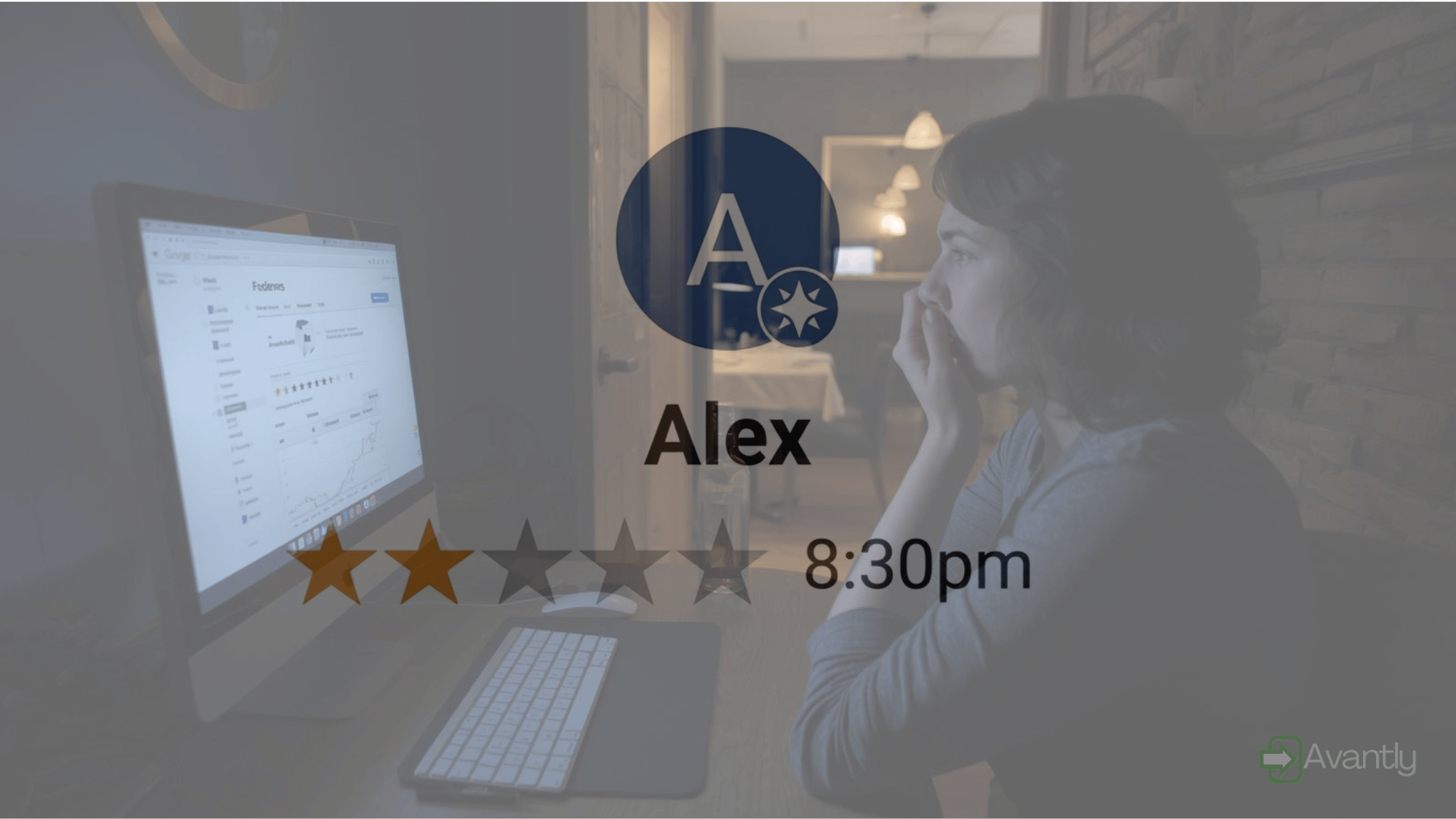
The 10-Minute Window is when that decision is still in motion. A guest who receives an SMS feedback request at 7:55 PM after a difficult experience at 7:45 PM is in a completely different psychological state than a guest who posts at 11:00 PM after telling the story twice at home.

In the early window, the guest still wants resolution. They want to be heard. They are not yet performing their grievance for an audience. An SMS that arrives and says, in plain language, "We want to know how tonight went for you" gives them somewhere to put it.

And when there is somewhere private to put it, most people use it.

What the psychology of review timing actually tells us

Research from the service recovery literature is consistent on this point: the speed of acknowledgement matters more than the nature of the resolution. A guest who feels noticed quickly is more forgiving than a guest who feels ignored well.

This is not specific to restaurants. It shows up in airline complaints, retail returns, and hotel disputes. The longer the gap between an experience and a response, the more the grievance hardens into a settled position.

For restaurants, this pattern has particular weight because the dining experience is emotional and sensory. A bad meal feels personal in a way that a delayed Amazon shipment does not. The guest sat down with expectations. The evening had a shape to it. When it went wrong, the disappointment was felt, not just noted.

Industry patterns suggest that a meaningful portion of one-star reviews could be intercepted if the guest had a private channel to express dissatisfaction before reaching Google. The window to access that channel is narrow. According to patterns in Avantly's operational data, most negative reviews are written within two hours of the experience, with a significant concentration in the first sixty minutes.

That number is usually higher than operators expect.

What proactive feedback changes versus reacting to public reviews

The instinct most operators have is to monitor. Set up alerts on Google. Watch the review count. Respond quickly when something bad appears.

That is a reasonable system for minimising the visible damage. It is not a system for restaurant negative review prevention.

Proactive feedback requests operate differently because they change who holds the channel.

When a guest posts publicly, the channel is Google's. The operator is a respondent in someone else's forum. The guest controls the narrative, the star rating, and the timing.

When an SMS feedback request arrives at 7:55 PM, the channel belongs to the restaurant. The operator initiated contact. The guest is responding to an invitation, not broadcasting to an audience. The conversation is private, direct, and recoverable.

This is what Avantly's SMS feedback capability, built on Twilio's messaging infrastructure, actually does in practice. The system triggers a feedback request based on the guest's visit, reaches them in the window when the experience is fresh, and routes their response (if warranted) to the right person at the right location. If the feedback signals dissatisfaction, the recovery process begins before the review is written.

When you don't have a phone number : the QR code card

SMS feedback works when you have a guest's mobile number. A lot of the time, you don't.

Walk-in guests, tables booked by a third party, large groups where only one person's information is on file — these are common situations where a triggered SMS simply isn't an option. The guest finishes their meal, the bill gets settled, and there is no direct line to reach them.

This is where the QR code card closes the gap.

After a guest pays, the server presents a branded card, specific to the restaurant, with a QR code that opens a feedback experience directly from their phone. The framing matters here: this is not a receipt insert and it is not a generic "tell us how we did" request. It is a moment of deliberate hospitality. The server hands it personally. The timing is right — the experience is fresh, the guest is still in the room, and the conversation is still alive.

The QR code feedback experience is designed to intercept the same impulse that drives a public review. A guest who scans the card and finds a clean, branded feedback form has a private channel to express whatever they are carrying. Most guests, given that option at the right moment, will use it rather than post publicly.

Critically, this means no guest leaves without an opportunity to be heard first. The SMS handles the guests you can reach. The QR code card handles everyone else. Together, they close the loop on the full dining room.

Takeout orders are just as likely to leave a review

Dine-in is where most operators focus their attention when it comes to reputation management. It is the experience they can see, manage, and intervene in directly.

But a guest who orders through UberEats or SkipTheDishes and receives cold food, a missing item, or the wrong order is just as likely to open Google when they are unhappy. They are sitting at home, the expectation was set, and the delivery fell short. The review window for a takeout order is, if anything, shorter — the phone is already in their hand.

Avantly supports multiple independent feedback streams per location, which means takeout orders can be tracked, captured, and reported on separately from dine-in experiences. A negative signal from a UberEats order routes differently than a signal from a table in the dining room, because the recovery and the context are different. An operator looking at a Friday evening report can see not just how many guests had a difficult experience, but whether those guests were seated or ordering from their couch.

That distinction matters when you are trying to understand where the operational problem actually lives. A pattern of negative takeout feedback is a supply chain or packaging issue. A pattern of negative dine-in feedback is a floor management or kitchen issue. Without separating the streams, both problems look identical in a star rating.

Most reputation management tools do not make that distinction. They aggregate everything into a single review score and leave operators to reverse-engineer what went wrong. Separating feedback by channel is how you turn a reputation score into an operational signal.

The mistake operators make when they think about reputation management

Most operators frame reputation management as something that happens after. After a review appears. After a guest complains. After a pattern shows up in the aggregate rating.

That framing is understandable. The problems are most visible after the fact. The review is the evidence. The star rating is the metric. So the response system builds around managing what is already visible.

But the moment that matters most is not after the review. It is before the decision to post one.


A dissatisfied guest is not immediately a lost guest. They are, briefly, a recoverable one.

Avantly

The 10-Minute Window is not a product feature. It is a description of how guest psychology actually works. A dissatisfied guest is not immediately a lost guest. They are, briefly, a recoverable one. The operators who understand that difference build systems that operate in that window; SMS for the guests they can reach directly, QR code cards for the guests they cannot, and separate feedback streams for every channel where a guest might have an experience worth capturing.

The platform built on technology with 8+ years of proven operation at scale in Canada's restaurant industry did not design SMS feedback as a review generation tool. It is a guest recovery tool. The reviews that follow from a recovered guest are a downstream result of an operator who moved first.

That is the distinction most reputation management advice misses entirely.

FAQ Section

  • What is the 10-Minute Window for restaurant reviews?

    The 10-Minute Window is the brief period after a guest has a negative dining experience but before they decide to post a public review. During this window, a dissatisfied guest is still reachable and often willing to respond privately to a direct feedback request. Once the window closes, the likelihood of public posting increases significantly.

  • What happens when a restaurant doesn't have a guest's phone number?

    When a mobile number is unavailable — walk-in guests, third-party bookings, large groups — a QR code card presented by the server after payment serves the same function as an SMS request. The guest scans the code, accesses a branded feedback experience from their phone, and has a private channel to express dissatisfaction before leaving. It ensures every guest, regardless of how they booked, has the opportunity to be heard before reaching a public review platform.
  • How does SMS feedback help with restaurant negative review prevention?

    SMS feedback requests reach guests while the experience is still fresh, before the decision to post publicly has been made. When a guest receives a personalised message asking how their visit went, they have a private channel to express dissatisfaction. Most guests prefer that option to posting publicly when it is offered promptly.

  • Can takeout orders through UberEats or SkipTheDishes be included in a feedback strategy?

    Yes. Takeout guests are just as likely to leave a public review as dine-in guests, and the window can be shorter because the phone is already in their hand when the issue occurs. Avantly supports multiple independent feedback streams per location, meaning takeout orders are captured, tracked, and reported on separately from dine-in experiences. This separation lets operators identify whether a feedback pattern is a delivery and packaging issue or a floor management issue — which are two completely different operational problems.

  • What is a restaurant complaint recovery process?

    A restaurant complaint recovery process is the structured set of steps an operator takes to identify a dissatisfied guest, reach them before they post publicly, resolve the issue, and track whether they return. An effective recovery process operates in real time, not after a review has been published.

  • How fast does SMS feedback need to arrive to be effective?

    Operational data suggests the most effective window is within ten to fifteen minutes of a guest completing their experience. Feedback requests sent the following day are significantly less effective, as the guest's emotional state has shifted from open-to-resolution to settled-in-their-opinion.

  • Can SMS and QR code feedback interception work across multiple locations?

    Yes, and this is where it becomes particularly valuable. A manual recovery process depends on a manager noticing a problem in real time. An automated feedback workflow triggers consistently across every location, every shift, and every channel — dine-in and takeout — without requiring someone to catch it live. For multi-location restaurant groups, the consistency across all those touchpoints is often more valuable than any single recovery.